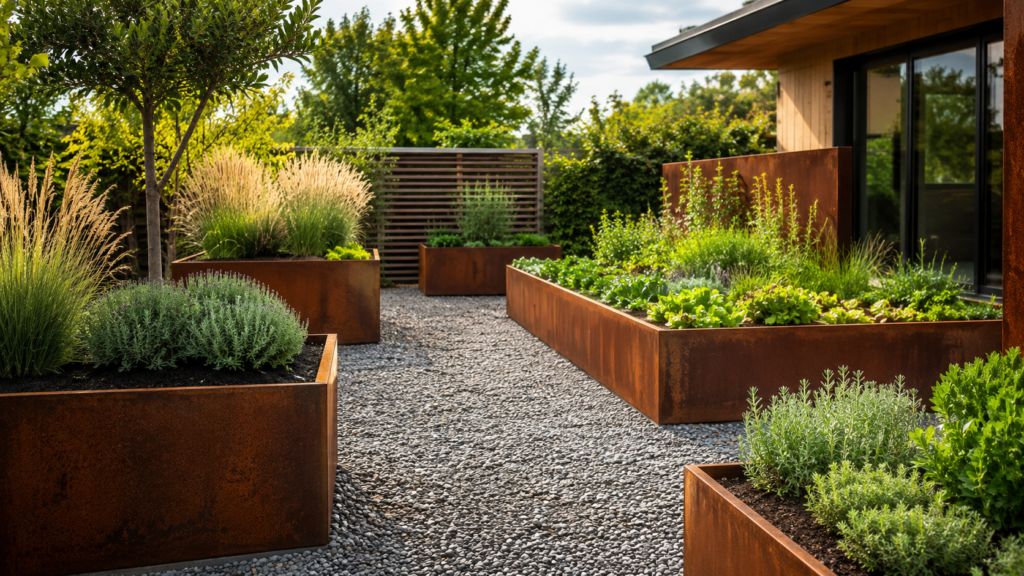
Creating a practical outdoor space often comes down to choosing materials that balance appearance, durability and maintenance. A corten planter box can introduce a strong architectural element while developing a distinctive weathered finish over time. For larger planting zones, corten raised garden beds can help define growing areas and create clearer separation between productive and decorative sections of a garden. Around these features, crushed rock can provide a practical surface for paths, access areas and low-maintenance zones, helping homeowners create outdoor spaces that are organised, functional and visually consistent.
Designing Around Defined Garden Zones
One of the most effective ways to improve an outdoor area is to divide it into clear functional zones. Instead of treating the garden as a single open space, different areas can be assigned specific purposes such as planting, entertaining, walking or storage.
Defined planting areas can help prevent gardens from appearing cluttered, particularly where several plant varieties are being used. Raised planting structures can also create stronger visual lines, making it easier to design around patios, fences and pathways.
In smaller gardens, this approach can be especially useful. Vertical edges and clearly contained planting areas provide structure without requiring large amounts of ground space.
Homeowners can also use different heights to create depth. Lower planting areas may work well beside paths, while taller beds can provide more prominent features near boundaries or outdoor entertaining areas.
Choosing Materials That Age Well
Outdoor landscaping materials need to perform in changing weather conditions while still fitting the overall design of the property.
Steel garden features are often chosen because their changing surface can become part of the design rather than something that needs to remain perfectly uniform. The weathered finish can suit both contemporary and more natural garden styles, particularly when paired with timber, stone, gravel and dense planting.
Material choice should also take maintenance into account. Some garden finishes require regular painting, sealing or cleaning, while others are selected specifically because their appearance changes naturally.
This can be valuable for homeowners who want an outdoor space that looks considered without requiring constant maintenance.
The surrounding architecture should guide the final selection. Modern homes may suit sharper lines and simple planting combinations, while older properties may benefit from softer plant choices that balance stronger landscape materials.
Building Practical Garden Paths
Pathways play an important role in how easily a garden can be used.
A well-positioned path can connect the house with sheds, entertaining spaces, side gates and planting areas while reducing foot traffic across lawns or garden beds. Paths can also help organise the landscape visually by establishing obvious routes through the property.
Before installing a path, drainage and ground preparation should be considered. Poorly prepared surfaces may become uneven, muddy or difficult to use after heavy rain.
The width of the path is another practical consideration. A narrow route may be suitable for occasional access, but areas used for wheelbarrows, bins or gardening equipment generally need more room.
Edging can help keep loose landscaping materials contained and create a cleaner transition between paths, lawns and planting areas.
Making Raised Planting More Useful
Elevated planting areas can be used for much more than visual interest.
They may make gardening more comfortable by reducing the amount of bending required for routine tasks such as planting, weeding and harvesting. This can be useful for vegetable gardens, herbs and frequently maintained ornamental plants.
Raised sections also give gardeners greater control over soil conditions. Instead of relying entirely on the existing ground, appropriate soil and organic matter can be added based on what is being grown.
Good drainage remains important. Beds should be positioned and prepared so excess water can move away from plant roots rather than collecting around them.
Plant selection should take the structure itself into account. Trailing plants can soften hard edges, while taller grasses and shrubs can create contrast against straight lines.
For productive gardens, grouping plants according to sunlight and watering requirements can also make ongoing maintenance easier.
Combining Hard and Soft Landscaping
Successful garden design usually relies on a balance between hard landscaping materials and living elements.
Too many hard surfaces can make a garden feel severe, while large areas of planting without clear structure can become difficult to maintain. Combining defined surfaces with trees, shrubs, grasses and groundcovers can create a more balanced result.
Texture is particularly useful. Smooth paving, weathered metal, loose stone and layered foliage each contribute a different visual quality.
Colour also influences how these materials work together. Warm natural finishes can sit comfortably beside green foliage, while neutral stone surfaces can provide a quieter background for feature plants.
Gardeners do not necessarily need a large number of different materials. Repeating the same finishes across several areas can make the overall landscape appear more coordinated.
Planning for Long-Term Maintenance
A garden may look impressive immediately after installation, but long-term maintenance determines how successfully the design performs.
Plants should be selected according to the available sunlight, soil conditions, drainage and local climate rather than appearance alone. Choosing appropriate species can reduce unnecessary watering, pruning and replacement.
Access should also be considered from the beginning. Garden beds that are difficult to reach can quickly become harder to maintain, while clear pathways can make routine gardening more manageable.
Weed control, drainage and surface movement should all be considered when preparing landscaped areas. Investing time in groundwork can reduce future maintenance and help materials remain stable.
A practical landscape does not have to be complicated. Strong boundaries, suitable materials and carefully planned planting can create an outdoor space that remains attractive and functional as the garden matures.
Creating a Cohesive Outdoor Space
The most effective landscapes tend to feel connected rather than made up of unrelated features.
Repeating similar materials, maintaining consistent lines and choosing plants that complement one another can create a stronger overall design. Functional decisions, such as where people walk or how garden areas are maintained, should also influence the layout.
By considering structure, access, planting and long-term upkeep together, homeowners can create gardens that are easier to use and more enjoyable throughout the year.
A well-planned outdoor space can continue to evolve as plants mature and materials develop character, allowing the landscape to become more established without losing its practical purpose.