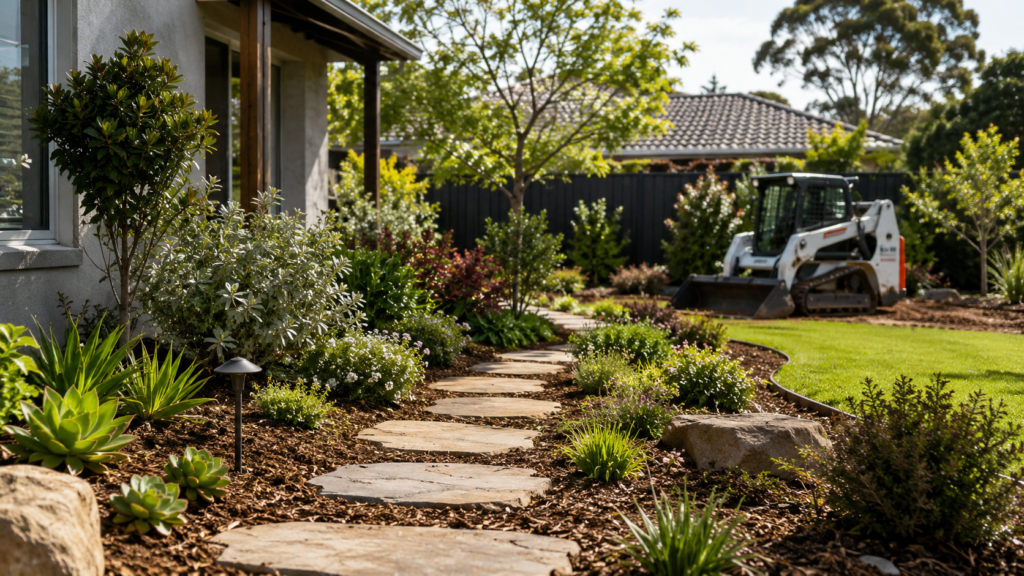
Improving an outdoor area does not always require a complete landscape redesign, as carefully chosen materials can make established gardens easier to maintain and more attractive. Adding garden mulch around plants can help create a neater finish while supporting practical garden maintenance. Pathways can also be refreshed with garden stepping stones, particularly where regular foot traffic has created worn or muddy areas between garden beds. For projects involving larger quantities of soil, gravel or landscaping materials, mini loader hire can reduce the amount of manual handling required and make moving material around a property considerably easier.
Start With the Areas That Need the Most Attention
Before purchasing landscaping materials, it helps to identify which parts of the garden are causing the most problems. Some areas may dry out quickly, while others may become muddy after rain or attract weeds throughout the warmer months.
Looking at how people use the outdoor space is equally important. A frequently used route between the house, shed and entertaining area may need a defined pathway, while garden beds near fences may benefit from a cleaner border and better ground coverage.
Working with the existing layout can often deliver better value than removing everything and starting again. Mature plants, established trees and existing garden beds can usually remain in place while surrounding surfaces and pathways are improved.
This approach also allows landscaping work to be completed gradually rather than requiring every part of the garden to be changed at once.
Improve Garden Beds With Better Ground Coverage
Exposed soil can quickly make garden beds look unfinished. It may also allow weeds to establish and moisture to evaporate more quickly during hot weather.
A layer of organic material over the soil provides a more consistent appearance while helping protect the surface underneath. Before spreading material, weeds should be removed and the soil around existing plants should be checked.
The depth of the layer matters. Too little coverage may break down quickly or expose patches of soil, while excessive amounts placed directly against trunks and stems can create unwanted moisture around plants.
Keeping a small gap around the base of shrubs and trees allows air to circulate and reduces the risk of material building up against stems.
Gardeners should also consider how quickly the chosen material will break down. Finer products can decompose faster, while larger pieces may remain visible for longer. The right choice depends on whether the priority is appearance, soil improvement or longer-lasting coverage.
Create Clear Routes Through the Garden
A practical pathway can change how an outdoor space is used. Without a defined route, people often take the shortest path across lawns or garden beds, gradually creating bare patches.
Individual stones can form an informal walkway without requiring a continuous paved surface. They can work well between vegetable beds, along the side of a house or through planted areas where a softer landscape style is preferred.
Placement should reflect a comfortable walking stride rather than simply arranging stones at equal distances. Temporarily positioning each piece before installation makes it easier to test the route and adjust spacing.
The surrounding surface should also be considered. Stones set into gravel, lawn or other landscape materials can create very different visual effects.
For stability, each piece needs a level base. A poorly installed stone may shift or rock when stepped on, particularly after heavy rain. Taking additional time during preparation can make the finished pathway safer and more comfortable to use.
Plan Material Movement Before Delivery
One of the most commonly overlooked parts of a landscaping project is how materials will move from the delivery point to the area where they are needed.
A pile of soil or gravel deposited on a driveway may need to travel a considerable distance before reaching a backyard. Moving several cubic metres by wheelbarrow can quickly become one of the most physically demanding parts of the project.
Before arranging delivery, property owners should check access widths, gates, slopes and overhead obstructions. Narrow side passages or tight turns may limit the machinery that can reach the work area.
The condition of existing surfaces should also be considered. Heavy equipment moving across lawns or soft ground can leave marks, particularly after wet weather.
Planning the route before materials arrive can prevent unnecessary double handling and help keep the project moving efficiently.
Order Landscaping Materials Carefully
Accurate measurements can reduce both waste and unexpected shortages. Garden beds should be measured by length and width, while the required depth will determine how much material is needed.
Irregularly shaped areas can be divided into smaller sections and calculated separately. This usually provides a more reliable estimate than attempting to measure the entire space as one shape.
It is sensible to allow a small amount for settlement and variations in ground level. However, ordering considerably more than required can leave homeowners with unwanted material and nowhere convenient to store it.
The same principle applies to stones and decorative materials. Measuring the area and deciding on spacing before purchasing makes it easier to estimate quantities.
Work in a Logical Order
Landscaping tasks are easier when completed in the right sequence. Heavy excavation, soil movement and major material deliveries should generally happen before delicate planting or finishing work.
Once larger materials have been moved into position, pathways can be established and garden beds prepared. Decorative surfaces and final planting can then complete the space.
This reduces the likelihood of machinery or wheelbarrows travelling across newly finished areas.
A staged approach is particularly useful for homeowners improving an established garden over several weekends. Each section can be completed properly without leaving the whole property disrupted for an extended period.
Small Changes Can Make a Noticeable Difference
A practical garden renovation does not need to involve major construction. Improving ground coverage, defining walking routes and planning how heavy materials will be moved can address many common problems while preserving the character of an existing outdoor area.
The most effective projects start with how the space is actually used. Materials can then be selected to solve specific issues rather than simply being added for decoration.
With careful measurements, sensible preparation and a logical order of work, even relatively simple landscaping changes can make a garden easier to navigate, maintain and enjoy throughout the year.